Continuing our theme of historical fiction, we’ve been trying our hands at writing our own. First up, Elaine Graham-Leigh on young love in a time of medieval antisemitism.
The Jews’ Garden by Elaine Graham-Leigh
The garden was out of sight of the Bena house, hidden by the slope of the hill. Only the branches of the fruit trees appeared above its walls, waving dark against the morning sun. The gate in the corner of the kitchen yard led to the alley between, but the Bena family seldom went that way. They faced forward, down to the workshop and the river and the new lower town beyond the bridge, away from the garden and its ancient stones. Except in the spring, when the blossom swirled over the wall like snow and Matheline’s father growled, ‘that garden should be ours.’
Matheline’s mother told her that it had belonged to them once, until grandfather Raimond sold it to Creschas of Orange for fifty livres. That money had paid for extending the workshop and had bought besides the half-share in the carding shed over at Limoux which would be in Matheline’s dowry when she married Aymeric Canet. It had been a good bargain, too good to be without a cost attached. Land here in the cité of Carcassonne was expensive, but fifty livres was still a high price for a garden. They had been tempted and now they regretted it. It went to show, her mother said, that you could never trust a Jew.
Matheline thought she remembered, from when she was very young, her grandfather sitting over wine with a man who had a long, grey beard and curling ringlets on each side of his face. They were talking, and laughing, and then her grandfather slapped his arm round the other man’s shoulders, as if he was a friend. People said that long ago, here in the south, Jews had lived just like everybody else. The Jews’ house was only up the street. It had a tower so old it could have come from the time of the Saracens. Matheline had played with Sarah and Isaac, Creschas’ grandchildren, sometimes, until the family stopped coming to Carcassonne. Gui Peire came up from the lower town to check on the house and the garden, once in every new moon, but otherwise the house and the garden were empty.
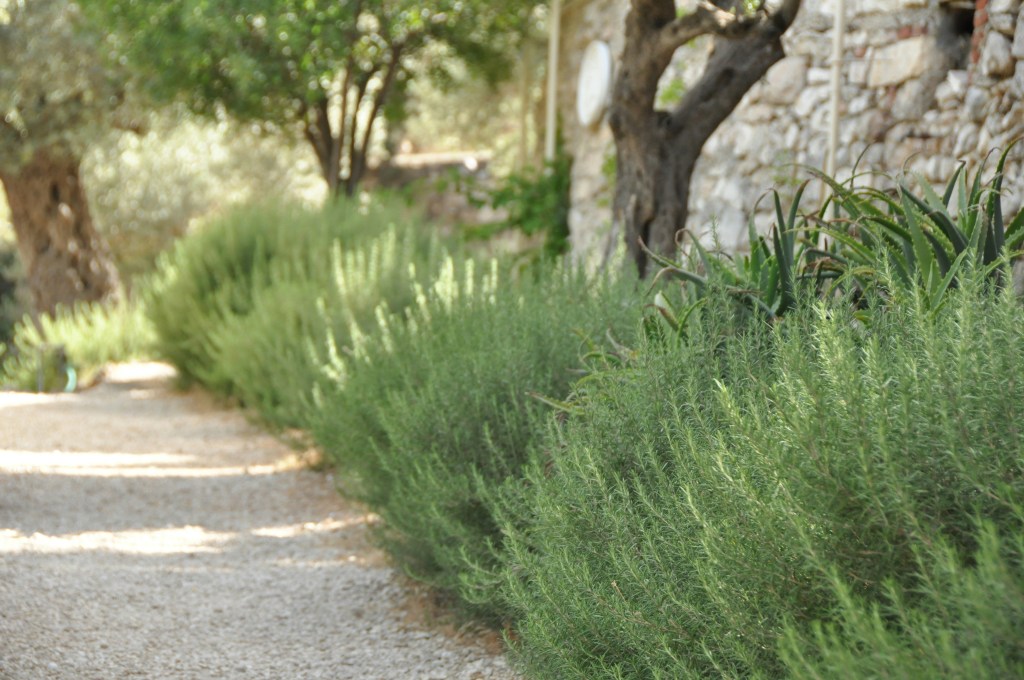
When Matheline was sixteen, she broke into the garden. It was one morning after Easter and she had been taking cuttings from the herbs in the kitchen yard. It had been a dry, cold winter and the plants that hadn’t died were thin and withered. There was hardly enough to cut; she would have to send Anna out to buy in the market. A breeze had blown in from the east, over the wall from the garden, bringing with it the scents of all the things growing in that good soil, thyme and rosemary and the fruit trees flowering. It had been like a breath of a wider world and she had been suddenly angry. Why should the Jews have all that richness and beauty, while she knelt in the dust? Why shouldn’t she take some of it back?
She hooked her empty basket into the crook of her arm and marched out of the yard. Across the alley was the gate to the garden, half-hidden in flowering creeper. She pushed the tendrils aside and tried the handle. It was locked, but the wood around it was old and rotten. She wrenched at the ring of the handle, once, twice, and then the third time, there was a great crack and the gate juddered open. She froze for a moment, sure that someone would come to investigate the noise, but no one did. She shoved around the edge of the gate and into the garden.
The rosemary bushes were everywhere, decked with mauve flowers. She cut bunch after bunch of the stalks, pulled handful after handful of thyme, even chopped sprigs of lavender with the flowers still tight and pale, just because she could, just for the sake of taking it, hacking at them so roughly that she was pulling some of them up by the roots. There was so much it wouldn’t all fit in her basket, she had to leave some of it piled by the side of the overgrown path, throwing it out, breathing heavily as if she had been running, or fighting.
The gate wouldn’t lock again. She managed to pull it so that it at least looked closed. She wondered if Gui Peire would have trouble because of it. ‘It serves him his deserts, a Christian working for Jews,’ she told herself. She wasn’t sure if she believed it. She crossed back over the yard and went in at the kitchen door. Anna turned from where she was tending the cassoulet over the hearth.
‘God’s bones, where did you get all that?’
Matheline tipped her chin up, ignoring the question. Anna might forget that she was a woman grown now, but she didn’t.
‘I’ll leave them here for you to see to the drying,’ she said.
Anna gave her a long, level look, holding her eyes until Matheline turned away.
‘Yes, Mistress,’ Anna said to her back.
She weighted the title like a blow, and Matheline couldn’t stop herself from flinching. Anna could not have known where she had been, what she had done, but it seemed as if she did, and that she judged her.
Lying sleepless that night beside her sisters, Matheline turned it over in her mind. Was stealing from Jews a sin? Was it wrong, to take from the garden? She didn’t know what a priest would say, but it felt to her now like theft, and worse, destruction. She remembered that frenzy of cutting with a shudder, how she’d wrenched the lavender from its home and left it uprooted and dying. She didn’t want to do that, ever again.
She vowed also that in penance she would never go to the garden again, but as the weeks passed and Gui Peire came and went without any enquiries or repairs to the broken lock, it began to seem as if never was quite a long time. There was no harm in just looking, she thought. She would not be stealing anything. So, all that year, whenever she could get free unobserved from her household duties, she slipped away to the garden.
One day, in the following spring, she was sitting up at the far end, out of the sun, where the chicory and the bellflowers bloomed among the rocks at the foot of the east wall. She had a bit of stitching in her lap, but she wasn’t working on it, she was simply watching the tree branches swaying over the blue sky. The scrape of the gate against the stone lintel was so unexpected that for a long moment, she couldn’t understand what it was. Then she realised.
She jumped up, shedding cloth, needle and thread, trying to straighten her skirts and tidy her hair. She had let her headcloth fall back into the undergrowth behind the stone she had been sitting on. She couldn’t see where it had gone. Where was it? Leaning over, she spotted a corner of the cloth, but it was caught on a twig and wouldn’t come to her hand. She pulled it hard and heard it tear.
‘Oh, by God’s bollocks!’ she cried.
‘Now, now, is that any sort of language for a young lady?’
It was a man’s voice, but with a laugh in it. She turned round and saw him on the overgrown path, grinning up at her.
He did not look like a servant. She noted the bands of Italian brocade edging his tunic and the little, silvered feathers on his cap. He looked like a successful merchant, albeit a young one, only a little older than her. He took off his cap, revealing blond curls, and bowed to her.
‘I know who you are, don’t I?’ he said. ‘You’re Matheline, Arnaud Bena’s daughter.’
He said it with such an air of triumph that she couldn’t help smiling back at him.
‘And I know who you are. You’re Joshua of Orange’s son Isaac.’
She held out her hand and he took it as she stepped down to the path. She stopped in front of him. He wasn’t tall, his chin was barely higher than hers, but his eyes were deep blue-grey, narrowed against the sun. He went on holding her hand.
‘Good day, then, Matheline,’ he said. His hand was smooth and cool on hers.
‘Good day to you,’ she said. ‘Good day.’
All that spring and summer, it seemed to Matheline that no time was real except for the time she spent secretly with Isaac, in the garden. She drifted through her days as if nothing could touch her, not her sisters’ squabbling, nor her mother’s talk of gowns and the Canet family’s expectations; not even her father’s complaining that the Jews could charge much more interest than he could on their loans. She did wonder in passing if he had always said such things about them, or if she was only now noticing it. None of it mattered, though. None of it was really there; only Isaac. Only him.
When the air was heavy with sun and thyme and the bees buzzing in the lavender, drowsy with heat and kissing they would lie on his cloak under the apple trees and talk. He had been sent now to oversee his family’s Carcassonne business, but he had travelled all over. He told her of Pisa and Genoa and Avignon of the Popes, and she caught him up on ten years of Carcassonne gossip. They talked about the world, about his life and hers, and he said that in all his journeying, he had never seen anyone as beautiful as she.
One afternoon, watching the clouds scudding through the branches, she said, transported,
‘I think we have found the way into the Garden of Eden.’
He propped himself up on one elbow to look at her and she was suddenly afraid that she had blundered.
‘I’m sorry, should I not…? I didn’t think…’
He took her hand, where it lay on the cloak between them, and kissed it, then her lips.
‘You could never say anything wrong, love. Anyway, don’t you know that Adam and Eve are in our holy book?’
‘No!’ she laughed, half-shocked, ‘Really?’
‘We are not as different as you think,’ he said, and he kissed her again.
Then, on a day in the middle of July, he was late. It was hot, so hot and close she longed to fling open a window even though she was outside. She waited on the path, feeling herself wilting like the flowers. He had never been late before. What could be wrong? When at last she heard his step in the alley it should have been a relief, but as he slipped through the gate, she saw he was wearing no tunic over his shirt, that he had on old shoes and a plain hood over his hair. He was usually so careful of his clothes, so happily proud of the money it had cost for him to have them, but now he could have been anybody. Fear gripped her like a fist around her heart. He pushed the gate shut behind him and stopped.
She asked, ‘what is it?’ Oh, love, what is it?’
He was staring down at his feet in their stained, rough shoes.
‘I have had word from my father,’ he said. ‘I have to leave. I have to pack up anything I can, and leave, and not come back.’
‘When?’
He looked up and she saw the chill that seized her reflected in his eyes.
‘Now.’
‘Now?’ she echoed. ‘How can you go now? How can you leave a life with so little time? And not come back? Not ever? What does he think you…? What does it mean?’ Her head was swimming. She felt herself begin to sway, gripping a rosemary bush for support, crushing the stems. He rushed to catch her.
‘Let’s get you into the shade,’ he said.
He drew her under the trees, under their apple tree, where they used to lie. This time he had no cloak to put down. She stood, letting the trunk hold her up, and he leant next to her. The scent of crushed rosemary hung around them.
‘It’s not my father’s fault. He had word, from Paris. It’s a close secret, but he has friends in strange places, they know he has interests here, still, so they warned him. The Lord King is going to round up all the Jews in the kingdom, imprison us and take all our property. After that, if we are lucky, we may be allowed to leave. If not…’
He waved his hand, a gesture that seemed to sketch the castle, the prison, the walls and the King’s fine new gibbets on the high road to Narbonne.
‘So I have to leave. I have time, I think, to get out of France and into Provence before the day appointed. Before they start.’
‘I see,’ she said.
She did see, she knew these things were done, in other places, in the north where the sun never shone. She had just never thought…
‘I can see it’s not your father’s fault; it’s my father’s. My father and people like him. I’m sorry.’
She turned away, unable to look at him. He patted her on the shoulder, the first awkward gesture she had ever known him make.
‘You could come with me,’ he said into her hair. ‘Be my wife and come away with me, it will be as if we brought the garden with us.’
She didn’t move. ‘And what will your father say, to your marrying a Christian?’
‘You could convert. Besides,’ he shrugged, ‘he would come to accept it in time. And if he didn’t, we could go far away. Be damned to him!’
She could hear the laugh brave in his voice. He slipped his arm round her waist, holding her close, and she rested her hand on his.
‘And the laws? The laws that say no Jew may marry a Christian?’
‘Then we’ll go somewhere where there are no laws. We’ll go to Chin, or Arabia, or the land of Prester John if we have to.’
‘And build ourselves a palace of rubies and gold, with fountains and gardens at the centre like in the days of the Saracens?’
‘You have it exactly,’ he said.
She turned back round then, so that she could see his face. He was still smiling, but his eyes in the shade of the tree were sombre. She could tell that he knew as well as she what they had to do, and she loved him for pretending.
‘When you find the land of Prester John, you can come back and fetch me,’ she said.
After a while, crushed against his shoulder, she raised her head and saw how the sun had moved.
‘You have to go, if you’re going to be on the road before night.’
‘I do.’ He pushed back her hair where it had come loose from its braiding. ‘Will you be all right? What will you do?’
‘Oh, I’ll be all right,’ she said. ‘I’ll marry Aymeric Canet and live in their house out at Montolieu. It may even be that there will be a garden, in time, although it won’t be as beautiful as this one. And you? What will you do?’
‘We have the house in Orange, and my father has friends in Genoa and Padua. He has said before he thinks our future is in the east, but I don’t know where he means.’
He tipped her chin up with his finger, tracing the tracks of her tears. ‘Don’t cry, love, there’s nothing to cry for. When I get to Chin, I’ll send you back some silk.’
‘Aymeric will like that,’ she said, trying to be tart.
He smiled at her for one last time. ‘I’ll send him back some as well.’
After he had gone, she sat for a long time in the heat, watching the shadows creep out from the walls and the jasmine flowers open, white and sweet, until it was almost full dark. When she raised her hand to brush away her last tears, it smelled still of the rosemary. She went into the house holding it to her face.
When, a week later, the property of all the Jews in the kingdom was seized by the King’s men, the seneschal had the garden locked and barred. It stayed that way for years, while the weeds grew and the creepers undermined the walls. When the seneschal came to sell it, Arnaud Bena said that he was too beset by the royal debt collectors, who were so much worse than the Jews had been, and by the costs of his daughters’ marriages, to be able to find the price. It went eventually to Simon of Albencon for ten livres. He wasn’t much for flowers, he said, but he needed somewhere in the cité to keep his goats.
Historical note
On Friday 22nd July 1306, the entire Jewish population of the Kingdom of France, about 100,000 people, were rounded up and imprisoned. Their houses were searched, and their property seized by the Crown. They were released gradually between that August and October with little more than the clothes on their backs and forced to leave France on pain of death. It is not known how many died in prison or on the journey.
In Carcassonne, in the south of France, property seized from Jews and sold by the King’s seneschal included a garden belonging to Isaac d’Orange. This is almost certainly not its story.
 Bounds Green Book Writers
One thought on “Historical fiction: The Jews’ Garden”