Susie Helme
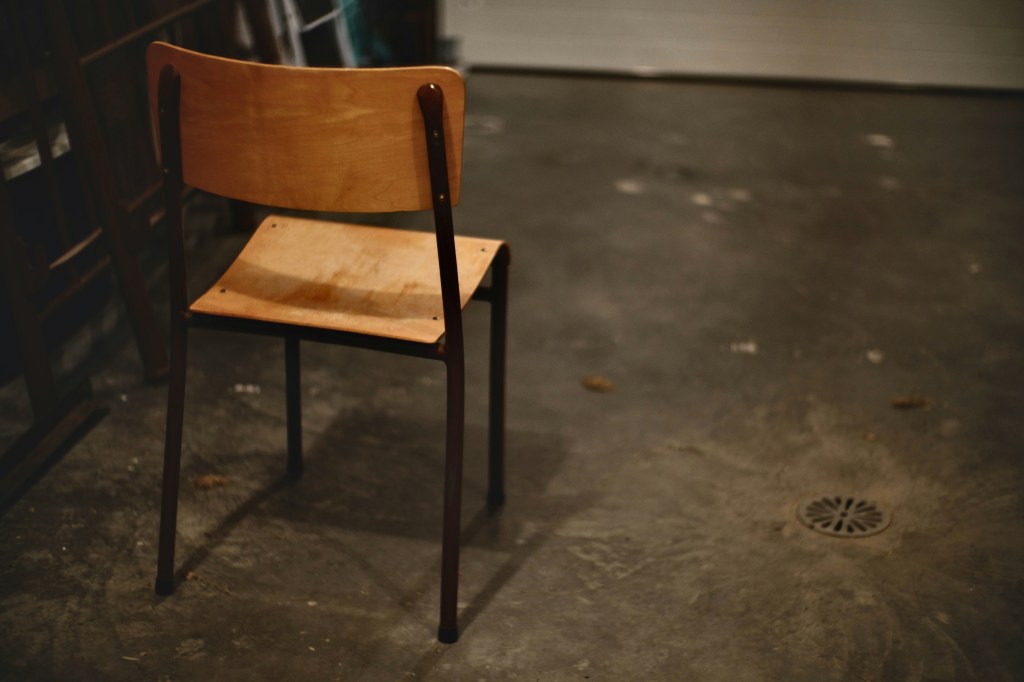
I listened to an interview with Michael Caine, recounting an incident he learned something from as a young actor. He was in a scene where a brouhaha between a man and wife had resulted in some violence, and a chair became lodged in the doorway. He said to the director, ‘I can’t go in the door, as there’s a chair stuck in the way’, but the director advised him to ‘use the difficulty’.
‘What do you mean?’ he said.
‘If it’s a comedy, fall over it; if it’s a drama smash it into pieces.’
I’m always advising clients, instead of Telling us that ‘she said, xyz angrily’ to Show us how angry she was by using action, subsequent dialogue, internal monologue, sensory clues or using props.
Here’s an example of each:
Action: ‘She stomped over to the window and threw Philip’s book out the window.’ That’s how angry she was.
Subsequent dialogue: ‘I can’t stand it a day longer, Philip,’ she shouted.’
Internal monologue: If Philiip says one more word, I’m going to punch him, she thought.
Sensory clues: ‘She clenched her teeth so tight, Philip feared she would break a tooth.’
Turn up the temperature
Michael Caine’s chair is a great example of using a prop. Just look at what can be conveyed here. One has the whole gamut of emotional choice, from comedy to drama. He could even point the dial toward sadism if he grabbed the chair and used it to torture the wife.
Writing coaches advise us to get our protagonists into hot water and then turn up the temperature. Create the difficulty, and then push it; use it to Show the stuff your hero is made of, who they’ve got on their side and who’s against them, how they’re feeling about their journey and where they want to go.
Props can help to intensify your story. Block their path with some physical obstacle; see what happens.
Scene setting
Props are not only a tool for Showing emotions. They help us visualise the scene. They establish the Setting, and bring the reader right down to centre stage. They provide colour and detail. “The more vivid the setting, the more intensely the reader can relate to the characters living in their story world.” What item in the room can “add more drama to the conflict at hand”? [1] Perhaps he’s on his knees proposing, when she espies a photo of him kissing his old girlfriend. That changes her perspective.
This is a secret well known by the film industry, which we creators of printed worlds should emulate.
What prop could you put on the stage to give your Setting some pizzazz? Writing coach Chip Scanlan suggests: “tightrope, net, someone else’s shoes, loom, zoom lens, accelerator pedal, scissors, trash can (bin), bible”.[2] A great list, as these are all not simply fascinating objects. They each have connotations beyond their thingness (sorry, Thesaurus gives me no suggestion). They can be metaphors for what your protagonist is experiencing.
A certain object can provide a theme which recurs throughout your story, a deep-seated metaphor. In the film Sleeping with the Enemy, the soup cans lined up neatly on the shelf strike fear in Julia Roberts’ heart, as they symbolise her controlling OCD ex.
Sometimes a prop can be important for your Plot. The magical talisman the old wisewoman gave your hero can give them invisibility so they can sneak up on the bad guys. The old diary they found in the attic can reveal some dark secret of their ancestor that changes everything.
I think you should picture your props and your settings even if you don’t end up using the words in your manuscript. What are they seeing? What objects are lying around in the vicinity? If you picture your Setting vividly in your mind, your fingers can write more vividly.
[1] Aspiring Writer Academy
[2] https://www.chipswritinglessons.com/2019/10/02/craft-lesson-writers-props/
 Bounds Green Book Writers